
A typical Wi-Fi 7 laptop tops out near 5.8 Gbps, not 46.
That laptop number is Intel’s own estimate, as The Verge reported in October 2023. Even half of it would be extravagant for most people, the same article noted.
So what really changes in your house?
Here’s the plain-English version: the features, the real speeds and when to buy.
What Is Wi-Fi 7?
Wi-Fi 7 is the Wi-Fi Alliance name for IEEE 802.11be, the seventh generation of the IEEE 802.11 wireless standard, also called Extremely High Throughput (EHT). Wi-Fi 7 uses the same 2.4 GHz, 5 GHz and 6 GHz bands as Wi-Fi 6E but moves much more data at once.
Don’t mix it up with 5G, which is cellular service from your phone carrier.
Every generation has a friendly name and an IEEE number. WIRED lays out the naming: Wi-Fi 5 was 802.11ac, Wi-Fi 6 was 802.11ax and Wi-Fi 7 is 802.11be.
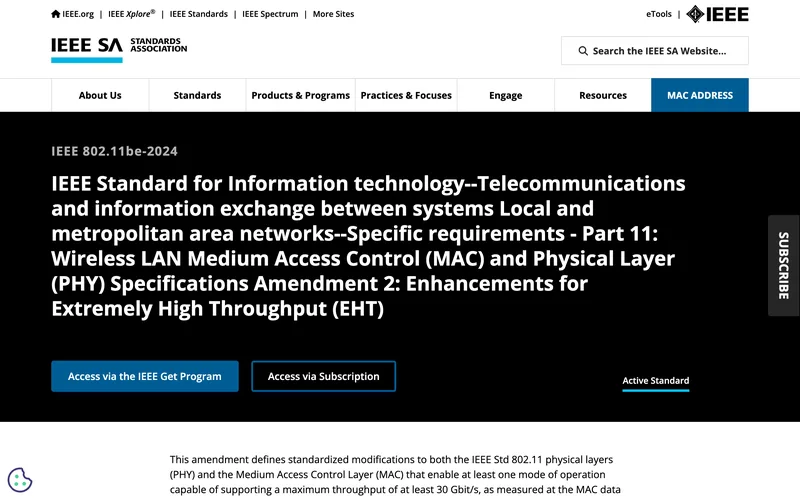
The IEEE 802.11be-2024 standard targets at least one mode with a maximum throughput of at least 30 Gbit/s.
Think of it as the next step up for your home Wi-Fi router, not a new kind of internet.
Is Wi-Fi 7 Available Yet?
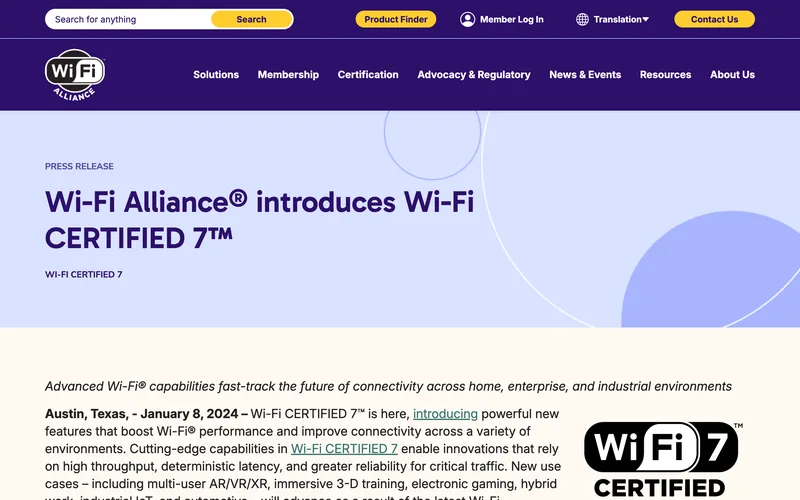
Yes, Wi-Fi 7 is available, and the Wi-Fi Alliance has certified Wi-Fi 7 devices since January 8, 2024.
Here’s the timeline:
- Early 2023: the first devices began rolling out, according to WIRED.
- Mid 2023: NETGEAR says its first products were available.
- January 8, 2024: the Alliance launched its certification program.
- September 26, 2024: IEEE’s standards board approved the final text.
- July 22, 2025: the standard was published.
The Verge advised waiting for certified gear that meets the finished standard. That wait is over, so look for the certification label.
For comparison, here’s when Wi-Fi 5 arrived, 2 generations earlier.
How Wi-Fi 7 Works (5 Features That Matter)
Wi-Fi 7 gets its speed from 5 features: 320 MHz channels, Multi-Link Operation (MLO), 4K-QAM, preamble puncturing with Multi-RU, and 16x16 MU-MIMO. Here’s what each one does for you.
320 MHz Channels in the 6 GHz Band
The new 320 MHz channels run only in the 6 GHz band and give twice the throughput of Wi-Fi 6, the Wi-Fi Alliance says. The 6E generation tops out at 160 MHz, according to WIRED.
Think of channel width as lanes on a road. Wider lanes carry more traffic, which is why channel width settings matter so much.
That 6 GHz space exists because the FCC adopted rules on April 23, 2020 opening 5.925-7.125 GHz to unlicensed use. NETGEAR says that 1.2 GHz of spectrum is what makes those extra-wide channels possible.
Multi-Link Operation (MLO)
Multi-Link Operation lets a device use several links at once for more throughput, lower latency and better reliability, says the Alliance’s launch release. Every earlier standard connected 2 devices on a single band.
Here’s an example:
In The Verge’s rough hypothetical, 1 Gbps on 6 GHz plus 700 Mbps on 5 GHz could combine to about 1.7 Gbps.
MLO is built for steadier connections, because traffic can be balanced across links instead of riding one band.
4K-QAM
4K-QAM packs more bits into each radio signal, and the Alliance says it achieves 20% higher transmission rates than Wi-Fi 6’s 1024-QAM.
The catch?
As QAM goes up, range drops and you need a stronger signal, WIRED explains. So expect that 20% boost mostly up close.
Preamble Puncturing and Multi-RU
Preamble puncturing lets a router slice off the part of a channel hit by interference and keep using the rest, as NETGEAR describes it. That way, a little interference doesn’t cost you the whole channel.
Multi-RU, per the Alliance, gives one device multiple resource units, which makes spectrum scheduling more flexible.
If you can see lots of nearby networks, picking clean Wi-Fi channels still helps too.
16x16 MU-MIMO
16x16 MU-MIMO is a router-side number: TP-Link’s Wi-Fi 7 page says the standard raises spatial streams from 8 to 16.
But don’t get too excited. The Verge noted it’s hard to find phones and laptops that do better than 2x2 MU-MIMO.
How Fast Is Wi-Fi 7?
Wi-Fi 7’s maximum theoretical speed is 46 Gbps, up from 9.6 Gbps for Wi-Fi 6, according to NETGEAR. Real devices see far less: Intel’s typical Wi-Fi 7 laptop tops out near 5.8 Gbps, and NETGEAR says Wi-Fi 7 phones reach up to 5 Gbps.
Why the giant gap?
The 46 Gbps figure is a theoretical ceiling, not a speed any single device reaches. The router maker says actual speeds depend on supported streams, your internet plan, your hardware and network traffic.
In other words, new hardware can’t make your plan faster than what you pay for. It just stops the wireless link from being the bottleneck.
Wi-Fi 7 vs. Wi-Fi 6 and Wi-Fi 6E
Wi-Fi 7 beats Wi-Fi 6 and Wi-Fi 6E with 320 MHz channels, 4K-QAM and Multi-Link Operation. Here’s how they compare, using figures from the Alliance, WIRED and NETGEAR:
| Feature | Wi-Fi 6 | Wi-Fi 6E | Wi-Fi 7 |
|---|---|---|---|
| 6 GHz band | No | Yes | Yes |
| Widest channel | 160 MHz | 160 MHz | 320 MHz |
| Modulation | 1024-QAM | 1024-QAM | 4K-QAM |
| Multi-Link Operation | No | No | Yes |
| Top theoretical speed | 9.6 Gbps | 9.6 Gbps | 46 Gbps |
The 6E generation’s main upgrade was access to the 6 GHz band, so the biggest new jumps are channel width and MLO.
Weighing a specific upgrade? Compare the new standard against Wi-Fi 6 or 6E against 7.
If you’re still on older gear, see what 6E added and the three-generation comparison going back two generations.
Does Wi-Fi 7 Have Better Range?
Wi-Fi 7 doesn’t add range, because its fastest features need a strong signal and the 6 GHz band has relatively short range, according to WIRED. You get Wi-Fi 7’s top speeds close to the router.
The good news?
The magazine says MLO can help offset that short 6 GHz range, so a mesh system keeps you connected as you move around. See how far the new standard reaches in a typical home.
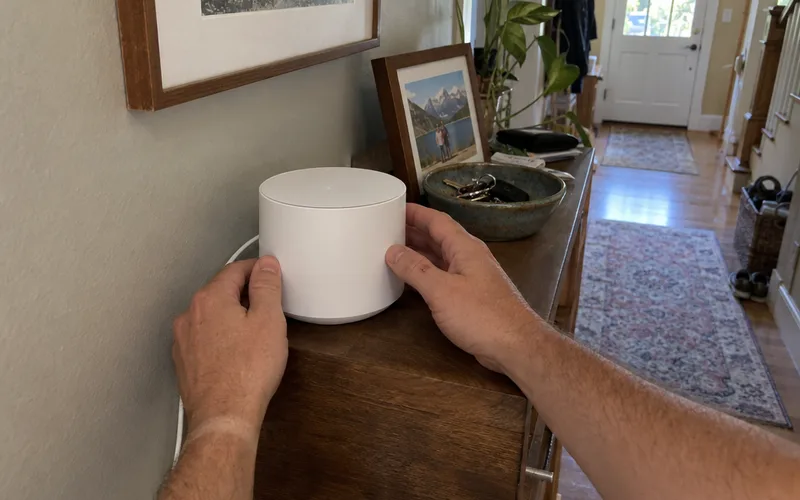
Key Takeaway: A new router alone won’t fix a weak far bedroom, so plan on mesh nodes or a wired access point.
Which Devices Support Wi-Fi 7?
Wi-Fi 7 works on devices with a Wi-Fi 7 chip, and WIRED reported in September 2024 that the latest flagship phones from Apple, Google and Samsung all have one. Older phones, laptops and smart home gear still connect, just without the new features.
Here’s the deal:
NETGEAR’s Wi-Fi 7 FAQ says only Wi-Fi 6E and Wi-Fi 7 devices can use the 6 GHz band. And only the newest generation gets 320 MHz channels and Multi-Link Operation.
The Verge named Qualcomm’s FastConnect 7800 as an early mobile chip for the standard.
The Wi-Fi Alliance forecast more than 233 million of these devices in 2024, growing to 2.1 billion by 2028. Phones, PCs and tablets lead the way.
Not sure about your own computer or phone? Here’s how to check for Wi-Fi 7 on each device.
What Comes After Wi-Fi 7?
Wi-Fi 8 is the next generation after Wi-Fi 7, and it’s still in development: IEEE’s P802.11bn project targets a mode that cuts 95th-percentile latency by 25% compared with Wi-Fi 7. The Wi-Fi Alliance describes Wi-Fi 8 as a generation built around reliability.
That makes the next standard a reason to watch, not a reason to wait. Compare the two generations side by side, or see what early Wi-Fi 8 router models promise.
Should You Buy a Wi-Fi 7 Router Now?
A Wi-Fi 7 router makes sense now if you still use a Wi-Fi 5 router, pay for multi-gigabit internet or were about to buy a pricey Wi-Fi 6E system. NETGEAR says anyone on a Wi-Fi 5 router gets immediate benefits from Wi-Fi 6, 6E or 7.
The company also says multi-gigabit internet plans are outpacing current wireless technology.
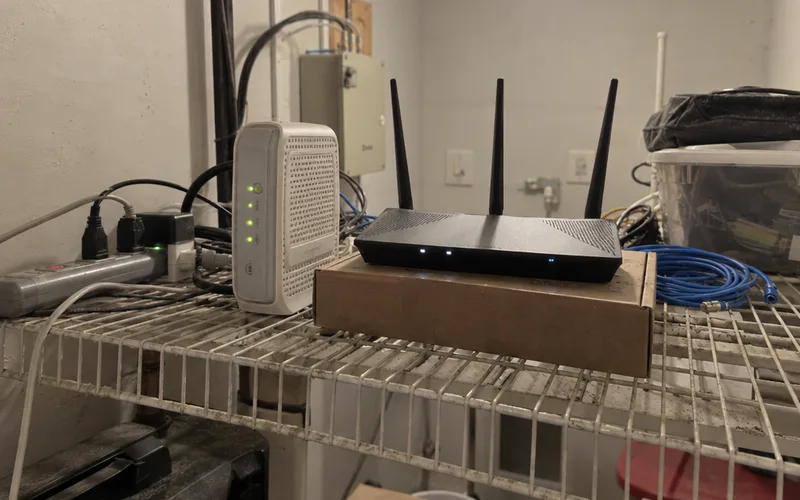
WIRED makes the 6E point plainly: a new system handles 6E devices and adds some future-proofing. Prices are easing too, with cheaper midrange models by September 2024.
That’s a big change from 2023, when The Verge reported the Eero Max 7 would cost just under $1,700 for a three-pack.
Skip it if you’re on Wi-Fi 6, your plan isn’t multi-gigabit and nothing feels slow. Unless your phone and laptop have the new chips, they won’t use its features anyway.
My advice? Check your router’s generation on its label or settings page tonight.
If it says Wi-Fi 5 or older, a certified Wi-Fi 7 model is the upgrade to buy.
Frequently Asked Questions
Is Wi-Fi 7 good for gaming?
Wi-Fi 7 helps gaming mostly through lower latency: TP-Link claims 4x lower latency than Wi-Fi 6/6E routers, a figure from its own lab tests. Your console or PC needs a matching adapter too, so check its spec sheet first.
How much does a Wi-Fi 7 router cost?
Wi-Fi 7 routers started expensive: The Verge reported in October 2023 that the Eero Max 7 mesh system was expected to cost just under $1,700 for a three-pack. By September 2024, WIRED reported cheaper midrange and entry-level models, so compare current listings first.
Is Wi-Fi 7 backward compatible with older devices?
Yes, Wi-Fi 7 routers work with Wi-Fi 6/6E, Wi-Fi 5 and Wi-Fi 4 devices, according to eero. Those older devices connect at their own generation’s speed, so they miss the new features.
How many devices can a Wi-Fi 7 router handle?
A Wi-Fi 7 system can serve up to 200 connected devices smoothly, depending on the model, according to eero. Check the exact count on your model’s spec sheet.